The real problem isn't building. It's launching.
The tools got good. Cursor, Claude Code, Lovable — you describe something, something appears. What didn't change is everything around the code. Read any community of people building with AI right now and the same confession keeps surfacing:
“I've built apps before. But honestly — I never launched beyond myself and a few people I know.”
There's no real curriculum for this. No structured path. You just figure it out until you hit a wall and the AI goes in circles.
Projects that never seem to reach completion.
The more I learn, the more anxious I feel about not actually understanding the AI's output.
You still have to wear a million hats — nobody talks about the decision fatigue.
How do I actually get people to use this thing?
The AI isn't going in circles. It's doing exactly what you asked — you just never decided what you were launching.
You don't have a coding problem. You have a sequencing problem. Every abandoned project died the same way: unbounded scope, no defined use cases, no launch date, no one waiting for it. That's fixable. It takes about five days.
Build less. Ship sooner. Learn faster.
Most people try to build the whole app, then launch it. Founders who ship do the opposite:
Launch the idea first. Then build the smallest useful version, one core use case at a time. Then ship it to real people.
Define the app, pick three core use cases, design it, put a real page on the internet.
One complete use case per phase. Not features. Use cases. Finished, working, end to end.
Polish, secure, deploy, and put it in front of actual humans.
One use case per build phase is the rule that saves you. It's what stops “while we're in here, we should also add…” from eating the next four months.
You already have the part that can't be taught
Everyone selling AI-app training right now is selling you tools. Almost nobody mentions what you're bringing to the table.
You know what to build.
You've worked in your world for years. You know which process everyone quietly hates, which software charges $99/month to do one thing badly, which fix nobody built. That knowledge used to be worthless on its own — it needed a dev team, a budget, and nine months you didn't have.
Now it's the entire advantage. The tooling handles the syntax. What it cannot do is know what's worth building, who it's for, or what “done enough to launch” looks like. That part is already yours. This week just connects it to a live URL.
You've been told there are two options
“Go learn to code first”
Six to twelve months of tutorials you'll procrastinate on (be honest), memorizing syntax an AI now writes for you.
“Just vibe it”
Prompt blindly, generate something fragile, never launch it because deep down you know it won't survive a real user.
Run a defined launch process
Direct AI the way a senior engineer directs a team, and ship a small real thing to real people — then let them tell you what to build next. Five days, one idea, and someone who's shipped a few hundred of these sitting next to you.
Launch → Build → Ship
A repeatable path you run on your own idea this week — and on every app you build after.
One-on-one. Just you and me. Live.
Not a group call. Not a webinar. Not a Slack channel where you post a question and wait three days. We schedule your five sessions around your calendar — mornings, evenings, whatever works. Nobody else's schedule is in the room.
Session one, we cut your idea down to three use cases and put it on the internet.
You are not building your entire app this week. You're building the version that proves it — and leaving with the system to build the rest.
“Before you build the app, launch the idea.”
We stand your environment up properly first — VS Code, Node, Git, Claude Code, authenticated and verified before your first prompt. Then the founder work: what problem it solves, who has it, why they'd pay. We cut it to three core use cases, write down what is explicitly not in v1, pick one platform, and design your actual screens with AI. Before you sleep Monday, your Coming Soon page is live with a signup form on it.
“One use case. Beginning to end. Finished.”
Core Use Case #1, complete. Start the flow, enter the information, save it, see the result, recover from an obvious mistake — a real database, real persistence, a working sign-in. This is also where you learn the directing skill the whole week runs on: giving Claude persistent project memory, planning before you prompt, and knowing when to let it run and when to stop it.
“Same system, second time. This is where it clicks.”
Core Use Case #2, using everything Build 1 taught you. Same architecture, same design direction, same decisions — unless there's a real reason to change them. You'll notice you're reaching for the process before you reach for the prompt. That's the shift the whole week is engineered to produce.
“Your MVP exists. You're mostly driving.”
Core Use Case #3, and your MVP covers the problem you set out to solve. It'll still be rough in places — that's correct. Rough and real beats polished and imaginary. By this session you're running the loop and I'm reviewing, catching the things that will bite you in production.
“Polish. Secure. Ship.”
Polish the rough edges a first user will actually hit. Then the security pass almost nobody teaches — AI-generated code is insecure by default, so we lock down access rules, get secrets out of client code, and bake the checklist in permanently. Then version control, hosting, HTTPS, custom domain: your app goes live at a real public URL, installable to your home screen. Then the handoff: the full First App Launch Kit and your plan for the next two weeks without me.
Friday afternoon, your app exists. Anyone with the link can use it.
Shipping isn't the finish line
You'll leave with the loop, not just the app: how to watch what users do, find where they struggle, and decide what's next based on evidence instead of imagination. Your next feature should come from a user, not from your own head at 11pm.
That's the difference between someone who built an app and someone who's running one.
The First App Launch Kit
Everything you leave with Friday, in one place. Not bonuses. Not a value stack with made-up prices attached. Just the complete inventory of what exists at the end of the week that didn't exist at the start.
A live, production-ready app
Not a demo. Not a prototype on your laptop. A real product at a real address.
Your launch assets
The app is half of a launch. This is the other half — and it's the half most people skip, which is why most apps go live to an audience of nobody.
The complete founder toolkit
This is the part that outlives the week. Everything here is reusable on the next app, and the one after that.
You don't just leave with an app. You leave with the system and the assets to launch the next one.
That's the actual product here. The app is proof it works.
Why this costs $299 — and why it won't for long
That's not a countdown timer. It's arithmetic. This is a new program, and I'd rather build a track record by underpricing my time than by writing marketing copy about how good it is. Ten people launch ten real apps, and then I have something better than a sales page.
What $299 includes
One payment. Five private sessions. The entire First App Launch Kit.
For comparison: a freelance developer charges $150–250/hour just to talk about your idea, and you'd leave that conversation with notes. This is 7.5 hours with a principal engineer, and you leave with a launched, live app.
The one condition, stated upfront: if you ship, I'll ask for a short honest review and permission to link to your live app. Not a scripted quote — whatever you actually think. That's the trade. If you'd rather stay private, tell me on the fit call and we'll do it at the regular rate.
Built with the same system you'll learn
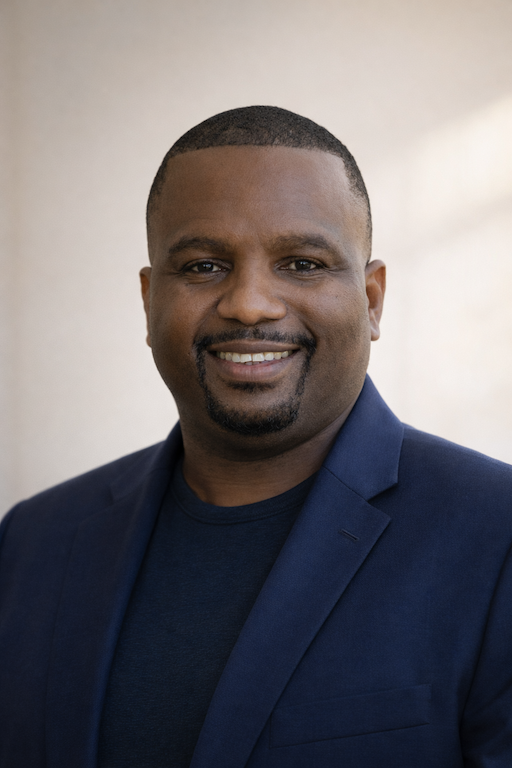
I'm not teaching from theory. This is the process I run on my own products, every week. Open them. Poke at them. They're real, they're live, and every one of them was launched exactly the way you'll launch yours this week.
That's the résumé. It matters for exactly one reason: it's why the five days get spent on your app instead of on my learning curve.
Aspiring app founders — one person, described four ways
What you all have in common: you found a problem worth solving. You just haven't shipped the solution yet.
This is NOT for you if…
Online — anywhere
Live over Zoom, screen to screen. Same one-on-one attention, from wherever you are.
In person — San Diego
Sit beside me and build. Limited local slots — when a week is full, it's full.
Good to know
No. We start where you are. The system works whether you've never written a line of code or you've been vibe coding for six months and hit a wall.
No — and that's the point. AI is a power tool, and you'll learn to drive it like a professional. You'll finish able to explain and fix what you built, not just generate code that scares you.
Your app ships on the web, which is exactly why you can launch this week. It's built mobile-first, so it looks and behaves like a phone app and installs straight to your home screen where it opens full-screen. The honest reason we go web-first: App Store and Google Play mean paid developer accounts, identity verification, and review queues that can take weeks — none of it in your control, and none of it belongs inside a five-day guarantee. Going native later is a natural next step, and this week's code is the foundation for it.
Next.js and React for the app, Supabase for database and authentication, Claude Code for AI-assisted development, deployed live with automatic HTTPS. The stack matters less than the process — the five phases transfer to anything you build next.
Most are. Monday is where we find the three use cases that prove it. That's a skill, not a compromise, and it's one of the main things you're here to learn.
Because four becomes seven, seven becomes a year, and a year becomes an abandoned repo. Three complete, working use cases is a product someone can use. Twenty half-finished ones is a folder on your laptop.
You launch the idea Monday and ship a working app covering three core use cases Friday. That's the promise and what the guarantee covers. It's deliberately not “your entire product” — the rest comes after, built by you, with the system you'll own by Friday.
You keep building. You'll have the entire First App Launch Kit — the live app, the launch assets, the templates, the checklists, and the iteration plan. There's nothing else to buy.
Neither. It's what the $299 buys. I gave it a name because “everything you leave with” is a mouthful and because most people underestimate how much of a launch isn't code.
No. Founding rate for the first 10 founders, then $749 — which is $100/hour for private engineering time, still less than half a freelance consult. Nothing about the program shrinks when the price goes up; I'm just done underwriting it.
The first cohort begins Monday, August 17, 2026. Because it's one-on-one, we schedule your five sessions around your calendar that week.